
A digital pioneer, a resilient democracy — but what does democracy look like on the ground in Estonia? From 5–7 October 2026, Estonia was the second stop in Democracy27’s Time to Listen phase. Members of our Task Force, Michał Boni, Madeleine de Cock Buning and Thomas Leysen, travelled to Tallinn to go beyond the country’s reputation for digital innovation and explore how democracy is experienced in practice.
Across three days and around 15 meetings, they heard from government representatives, civil society, researchers, journalists, business and opinion leaders, and young people. The conversations explored both the strengths of Estonia’s democratic model and the tensions beneath the surface — from citizen participation and generational renewal to disinformation, digitalisation and social cohesion.
Here are Task Force member Michał Boni’s key takeaways from Estonia.
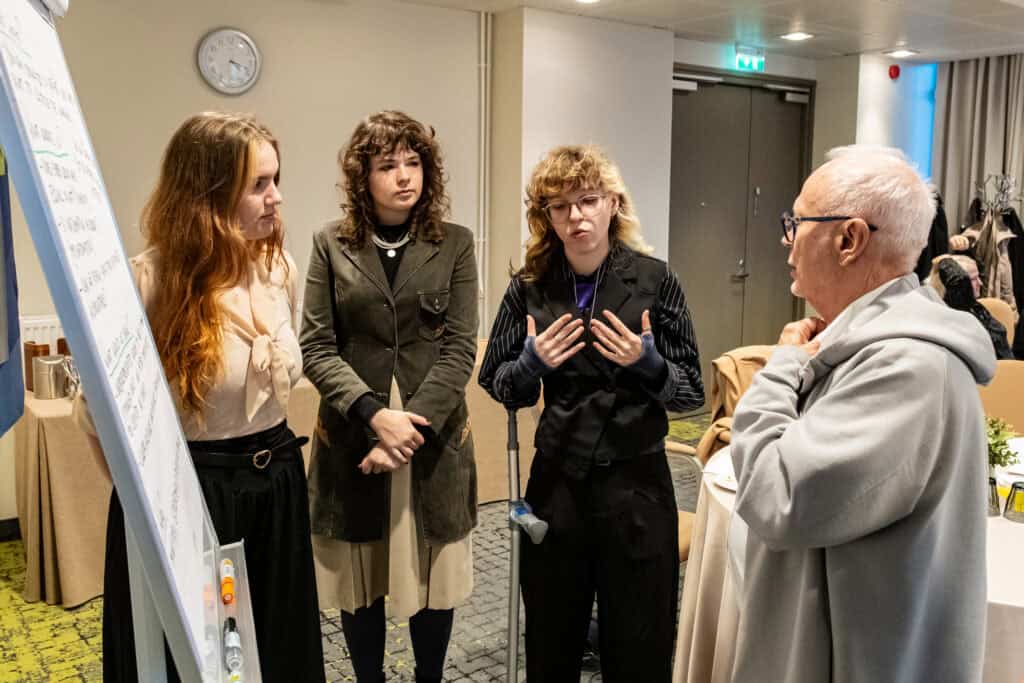
Michał Boni listening to young Estonian citizens during the visit’s Youth Roundtable
Which democratic challenges or tensions stood out the most?
For Michał Boni, the overall picture was positive: Estonia has strong democratic institutions, but the conversations also highlighted areas where its democratic system could be strengthened.
One challenge is generational renewal. While the delegation met highly engaged young parliamentarians, Boni noted the difficulties younger generations can face in entering political life and making their voices heard, that surfaced from listening directly to young Estonian citizens.
Another is citizen participation. Some conversations pointed to a gap between institutions and civil society, with opportunities to contribute to consultation and decision-making still relatively limited. Several argued that this also affects trust in institutions, particularly where citizens feel they have few meaningful opportunities to influence decisions that affect them. However, there are new developments in the already existing Estonia’s legislative consultation system, which could create additional opportunities for organisations and individual citizens to participate at an earlier stage of policymaking.
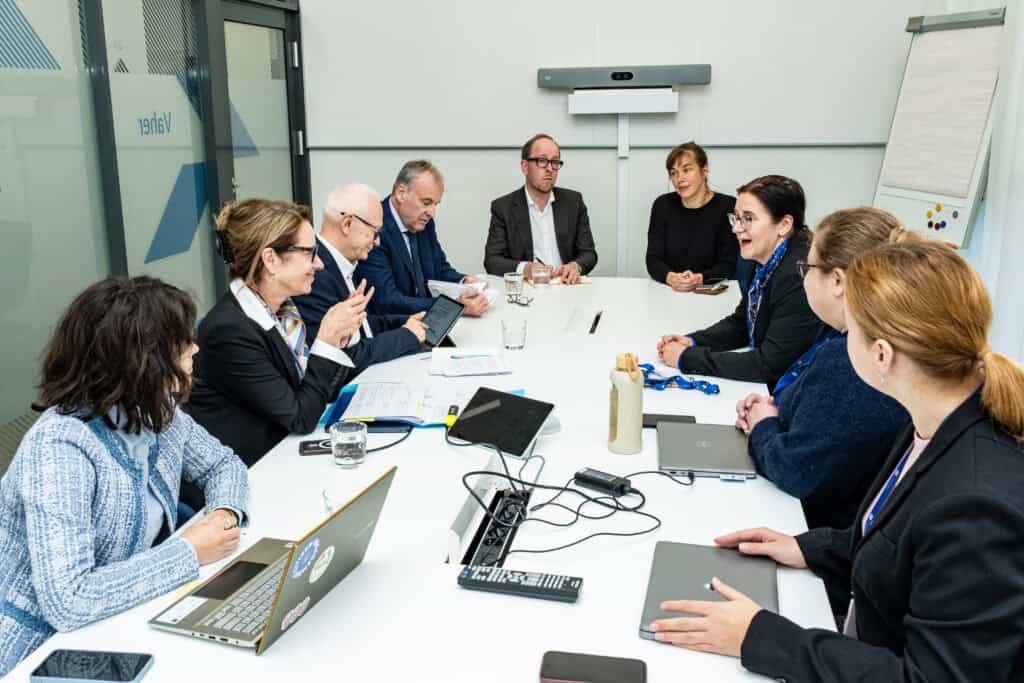
Democracy27 delegation to Estonia in conversation with Minister of Justice and Digital Affairs Liisa-Ly Pakosta
Which of these challenges resonate with broader democratic trends across Europe?
For Boni, who was involved in Poland’s democratic transformation through the Solidarity Movement, these challenges echo developments across Europe, particularly when it comes to political renewal and citizen participation.
Disinformation is another shared challenge. Conversations in Estonia highlighted polarising narratives around migration, LGBTQ+ rights and climate policy, fuelled by disinformation. At the same time, Boni pointed to Estonia’s resilience to information threats, supported by education, awareness of disinformation and its historical experience.
Conversations also touched on Estonian- and Russian-speaking communities. While some interlocutors highlighted successful integration, others pointed to remaining tensions, raising broader questions about how to strengthen social cohesion while respecting different identities. These points raise a wider European question: how can democracies remain open and participatory while becoming more resilient to manipulation and polarisation?
Did any particularly promising recommendations or solutions emerge?
Estonia’s digital state model particularly stood out to Boni, a former Polish Minister of Administration and Digitisation and Member of the European Parliament. From e-services and healthcare to online voting, Estonia has spent decades using technology to connect citizens and the state — and continues to develop new solutions. Boni highlighted initiatives giving citizens greater transparency over who accesses their personal data and how it is used, showing how digitalisation can contribute to transparency and trust.
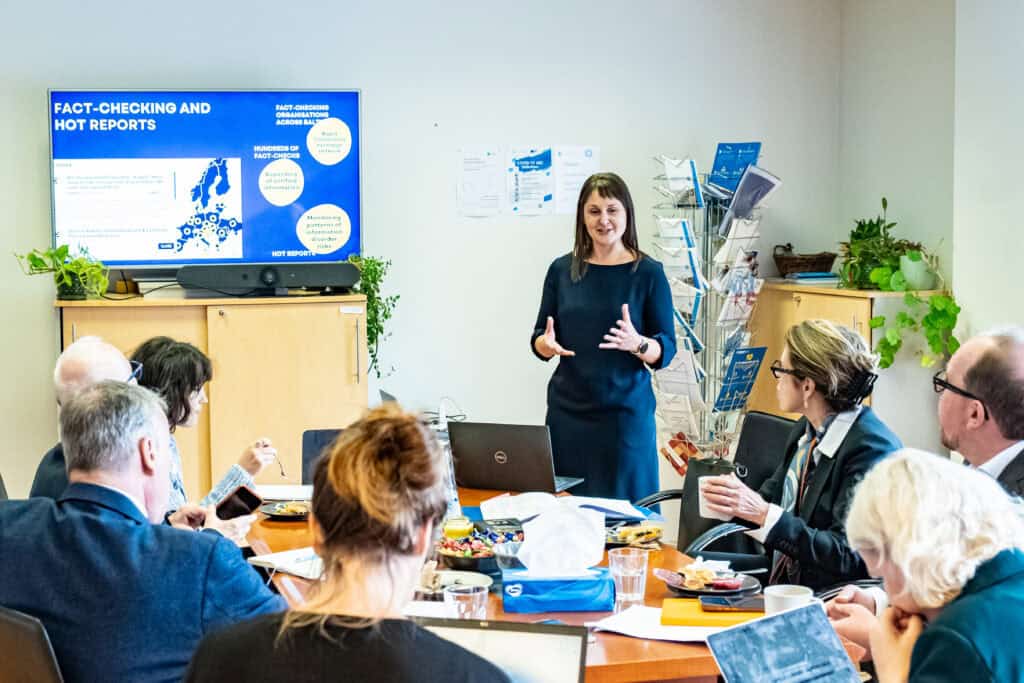
Democracy27 delegation listening to Marju Himma, Associate Professor of Journalism Studies at the University of Tartu and Project Lead at the Baltic Engagement Centre for Combating Information Disorders
From listening to recommendations
The Estonia visit highlighted both the strengths of the country’s democratic model and questions that resonate across Europe: how to engage younger generations, create meaningful opportunities for participation, counter disinformation and strengthen social cohesion.
The insights gathered in Estonia, alongside Democracy27’s other country visits, citizen consultations and research, will contribute to our final report and recommendations for democratic renewal, to be published in March 2027.